What Is in E-Liquid?
E-liquid — also called e-juice or vape juice — is the fluid that an e-cigarette turns into aerosol. It is built from a small number of ingredients, and knowing what they are demystifies a lot of the debate about what people are actually inhaling. This page explains the components and their safety history factually. It sells nothing and recommends nothing; measurements and terms are described only so you can understand labels and reporting.
Independent educational resource. Vapor Hub is an information-only reference. Nothing here is for sale, and nothing here encourages anyone to start using nicotine. Intended for adults of legal age (18+ in the UK and EU, 21+ in the United States). This is not medical advice — speak with a qualified professional about your own health. If you do not smoke or vape, the best choice is not to start.
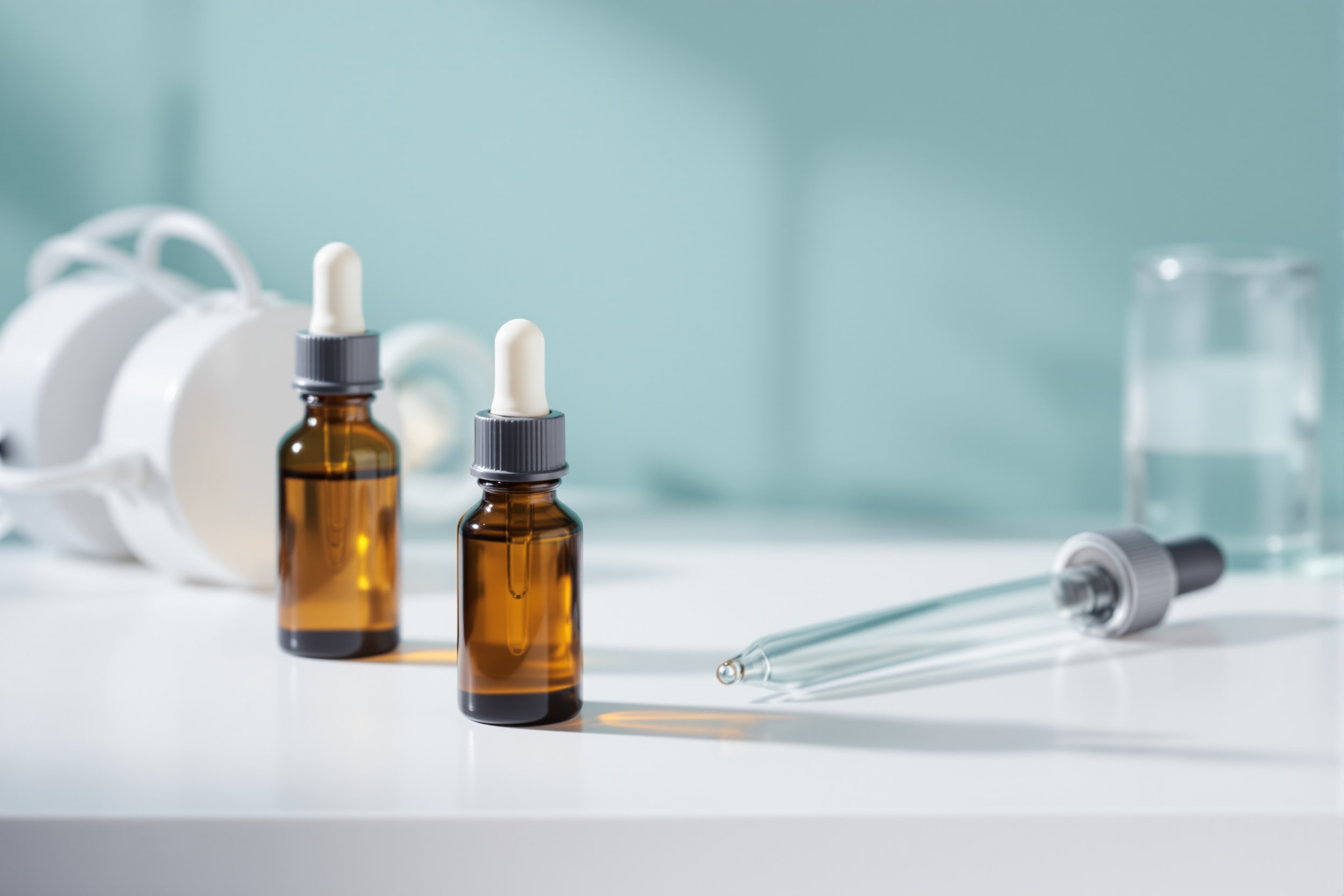
The two base liquids: PG and VG
Most e-liquid is roughly nine-tenths base fluid, and that base is a blend of two substances: propylene glycol (PG) and vegetable glycerine (VG). Both are common, well-studied compounds used for decades in food, cosmetics and pharmaceuticals — PG, for example, appears in many food products and in some inhaler medications. In e-liquid they do different jobs. PG is thin, carries flavour well and produces a sharper “throat hit” that some ex-smokers find satisfying. VG is thicker, slightly sweet, and produces more visible aerosol. A liquid described as “70/30” simply has 70% VG and 30% PG.
It is worth being precise: the fact that PG and VG are safe to eat does not automatically prove they are harmless to inhale over many years, because the lungs are not the digestive system. Regulators treat inhalation as its own question, which is part of why long-term studies continue.
Flavourings — and the diacetyl story
Flavourings are what make one liquid taste of tobacco and another of fruit. They are typically food-grade compounds, but again, “safe to eat” is not the same as “safe to inhale,” and this is where the most important safety episode in e-liquid history comes in. Diacetyl is a buttery-tasting flavour chemical that is harmless in food but, when inhaled in large quantities in an industrial setting, was linked to a serious lung condition nicknamed “popcorn lung.” When researchers found diacetyl in some early e-liquids, it prompted widespread concern and, in the European Union and United Kingdom, an outright ban on diacetyl in vaping products under the Tobacco Products Directive. Reputable manufacturers now test for and exclude it — the former Vapor Hub store, for instance, published “diacetyl reports” for its liquids — but the episode remains the clearest example of why inhalation safety must be assessed ingredient by ingredient. You can read the UK regulator’s position via the MHRA guidance on e-cigarette regulations.
Nicotine: strength and format
Nicotine is optional — zero-nicotine e-liquid exists — but when present it is the addictive component, and its concentration is stated on the label in milligrams per millilitre (mg/ml) or as a percentage. A liquid labelled 6 mg/ml contains six milligrams of nicotine in every millilitre; “1.8%” is the same as 18 mg/ml. In the EU and UK the Tobacco Products Directive caps nicotine strength at 20 mg/ml and bottle sizes for nicotine-containing refills at 10 ml. The United States does not impose the same strength cap, which is one reason American products historically reached much higher concentrations.
There are also two chemical formats. Freebase nicotine is the traditional form and can feel harsh at high strengths. Nicotine salts are a modified form that feels smoother and is absorbed quickly, which is why low-power pod devices often use higher-strength salt liquids. Because format and device interact, the same number on the label can feel very different depending on the hardware — see the devices page.
What the aerosol is not
A persistent myth is that vapour is “just water.” It is not. The aerosol contains PG, VG, flavour compounds, nicotine if present, and trace amounts of other substances. The reassuring finding from bodies such as the CDC and UK reviews is that the aerosol generally contains far fewer, and far lower levels of, toxicants than cigarette smoke — but “fewer toxicants than the most harmful consumer product ever mass-marketed” is a low bar, not a clean bill of health. This is the careful, evidence-based framing worth keeping in mind.
Reading a label
In regulated markets an e-liquid label should tell you the PG/VG ratio, the nicotine strength, the bottle volume, a batch number, and carry the required health warning and child-resistant packaging. An unlabelled or informally sold liquid — particularly anything containing THC bought outside the legal market — is a different and more dangerous proposition, as the health and safety page explains in the context of the 2019 EVALI outbreak.
For the meaning of any unfamiliar term on this page, the glossary has plain definitions.