Vape Battery Safety
Of all the parts of an e-cigarette, the battery is the only one that can fail dangerously, and the rare but serious incidents you may have read about — a device overheating or venting in a pocket — are almost always battery incidents. This page explains, in plain language, why lithium-ion cells can be hazardous and what causes them to fail. It is a safety-awareness reference for adults, not a set of usage instructions or a product guide.
Independent educational resource. Vapor Hub is an information-only reference. Nothing here is for sale, and nothing here encourages anyone to start using nicotine. Intended for adults of legal age (18+ in the UK and EU, 21+ in the United States). This is not medical advice — speak with a qualified professional about your own health. If you do not smoke or vape, the best choice is not to start.
Why lithium-ion cells demand respect
Lithium-ion batteries pack a remarkable amount of energy into a small, light package — which is exactly what makes them useful and, if abused, hazardous. The same chemistry that powers phones and laptops powers vapes, and the removable cylindrical cells used in many larger devices (commonly the 18650, and larger 20700 or 21700 sizes) are high-drain cells capable of delivering a lot of current very quickly. Treated correctly they are reliable; treated carelessly they can overheat, vent flammable gas, or in the worst case enter thermal runaway — a self-feeding reaction where the cell rapidly heats itself, which is very hard to stop once it begins.
The most common cause: a short circuit
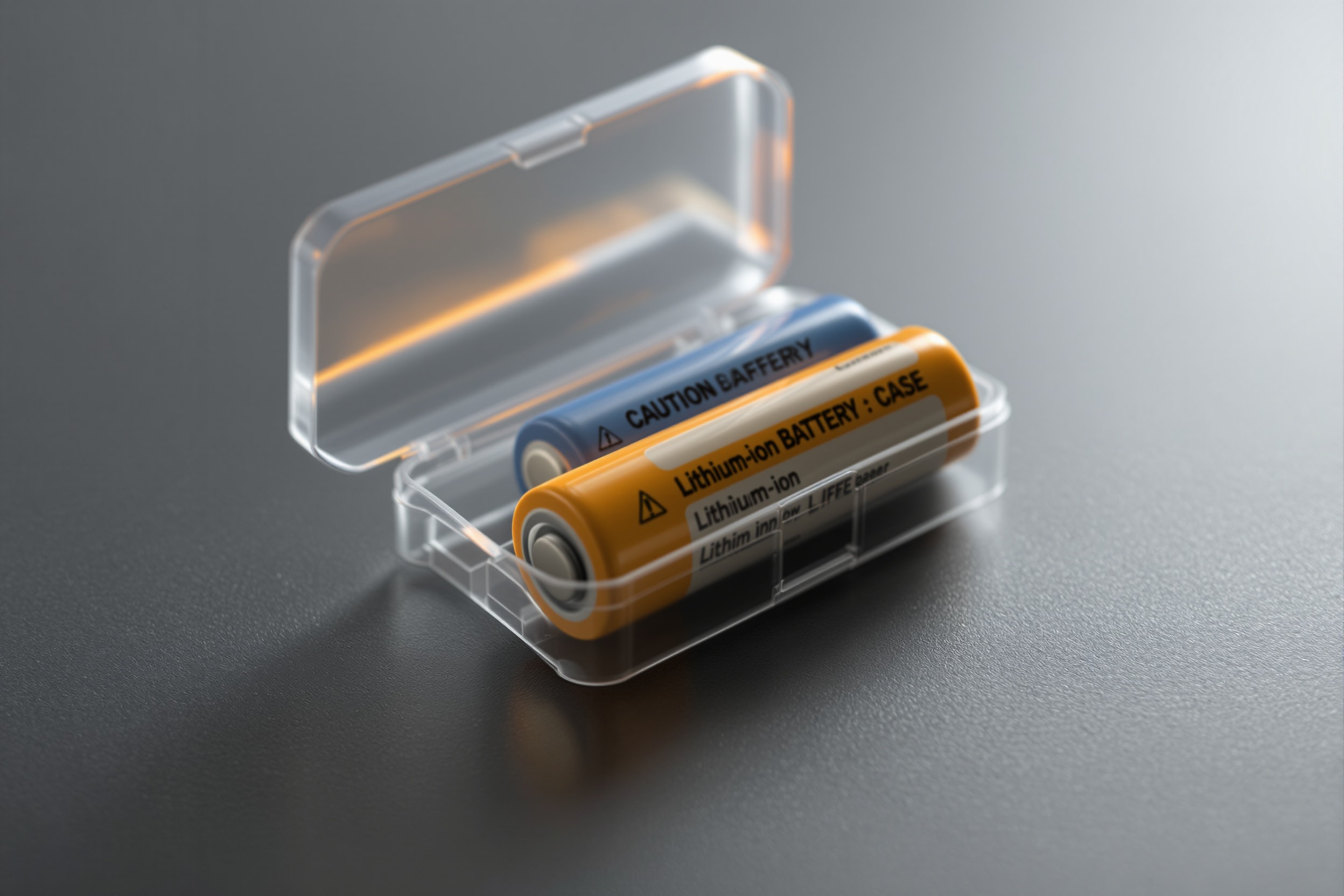
The classic dangerous scenario is a loose bare battery carried in a pocket or bag alongside keys or coins. Metal touching both terminals of a bare cell creates a dead short, dumping the battery’s full energy through that metal in seconds. The cell heats violently and can vent or burn. This is why safety guidance is unanimous that loose cells should never be carried against metal — a dedicated plastic battery case is the standard precaution. The U.S. Fire Administration’s report on e-cigarette fires and explosions found that the pocket short circuit is among the most frequent failure modes.
Damaged wraps and worn cells
Every cylindrical cell is covered in a thin plastic “wrap” and a small insulating ring at the positive end. That wrap is not decoration — it is electrical insulation. A torn or nicked wrap exposes the metal body of the cell, turning the whole outer casing into a live contact and making an accidental short far easier. A cell with any tear in its wrap should be taken out of service. Batteries also age: they lose capacity, and physical damage, dents or exposure to heat all shorten their safe life.
Charging matters
Overcharging, using an unsuitable charger, or leaving cells charging unattended overnight are recurring themes in incident reports. Devices and chargers designed for the specific cells, that stop at the correct voltage, are the safe path; generic or mismatched chargers are a known risk. As a general fire-safety principle, lithium devices should be charged on a hard, non-flammable surface and not left unattended for long periods.
Regulated devices protect you; mechanical mods do not
This is where hardware choice becomes a safety issue. A regulated device (see the devices page) contains a circuit board that monitors for short circuits, over-discharge and overheating and will simply refuse to fire when something is wrong. A mechanical mod has none of that: it connects the battery straight to the coil. On a mechanical mod, building a coil with too low a resistance can demand more current than the cell can safely deliver, pushing it past its limit. Safe use of unregulated hardware requires understanding a cell’s continuous discharge rating and the basics of Ohm’s law — which is precisely why unregulated devices are considered advanced equipment and why most people are better served by regulated ones.
Recognising a problem
A cell that becomes unusually hot, that hisses or vents, or that has a swollen or deformed casing is failing and should be moved — if it can be done safely — away from anything flammable. A cell involved in any venting event should never be reused. Because a venting lithium cell can produce its own oxygen-independent reaction, these events are difficult to extinguish; prevention is far more effective than response.
Disposal
Lithium cells and the batteries inside disposable vapes should never go in household rubbish, where they can be crushed and ignite in bins or collection trucks — a growing problem as disposable vape sales have risen. They belong in battery-recycling collection points. Many regions now provide specific take-back schemes for vapes; local authority recycling guidance is the place to check.
The single most important takeaway is simple: treat vape batteries with the same caution you would any high-energy lithium cell, never carry bare cells against metal, and retire any battery with a damaged wrap. For definitions of terms like sub-ohm or continuous discharge rating, see the glossary.